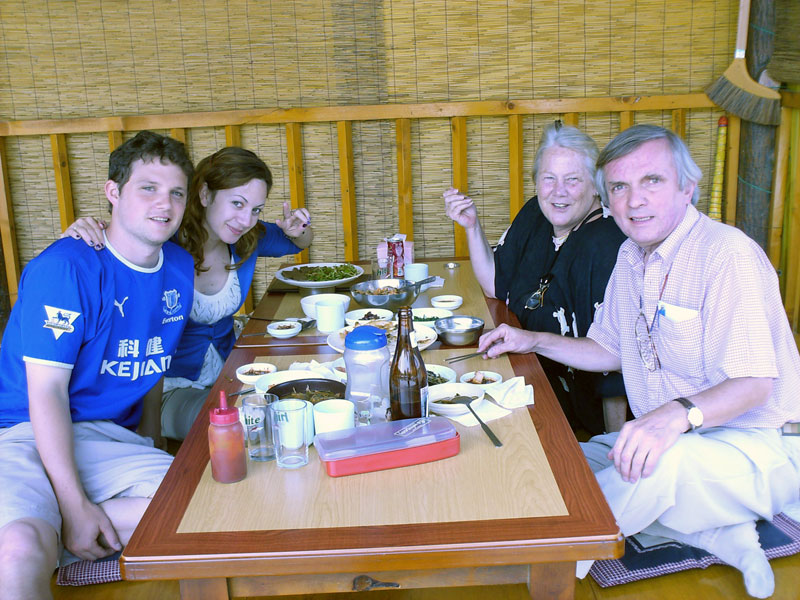
The waiter took this photo a little late in our outdoor Korean-style lunch, after we went through many dishes meats, vegetables, sauces and, of course, a couple of different kimchees, that came from the pots in the photo above right. Korean food is excellent!
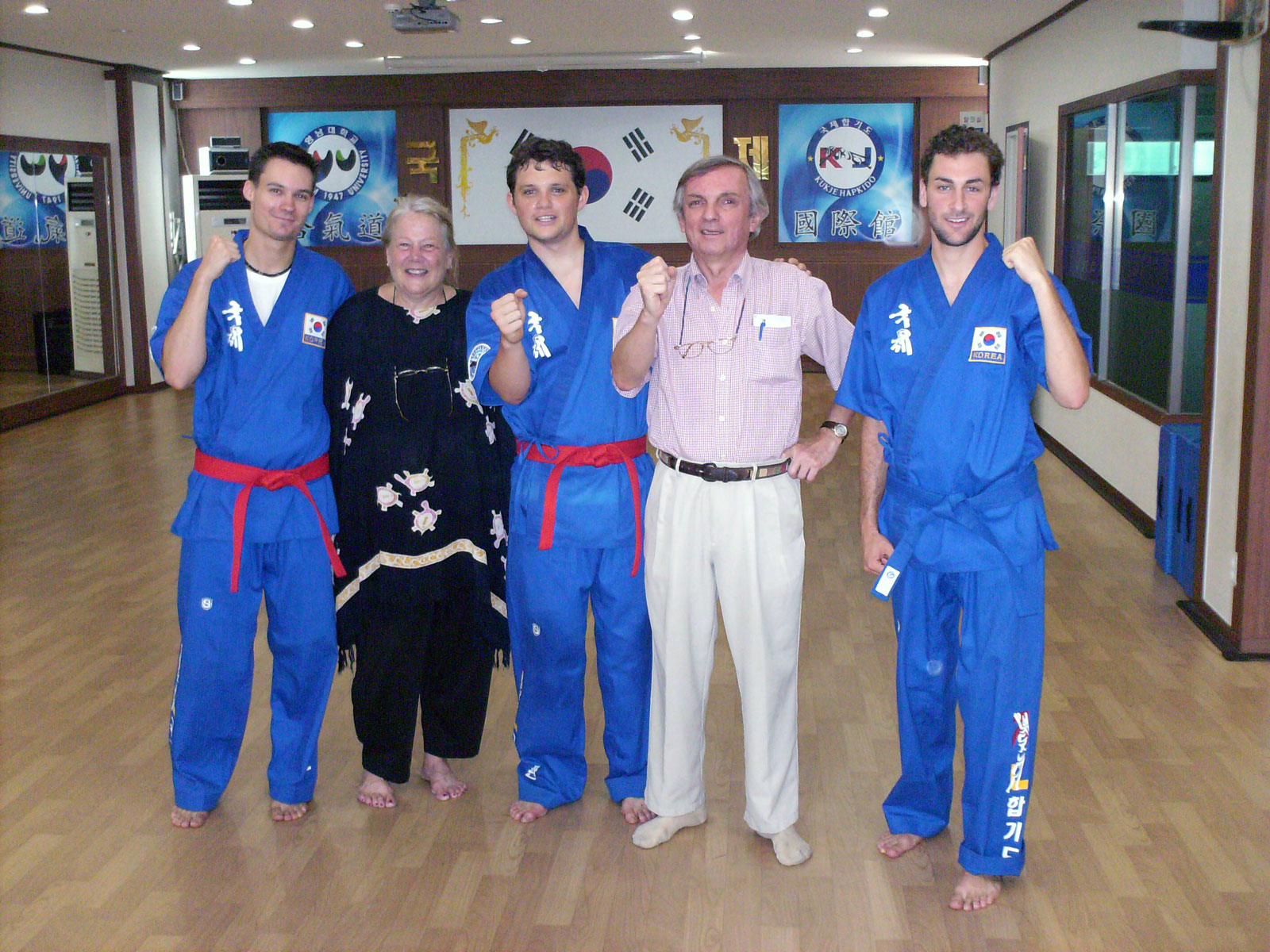
We visited David's hapkido class that he takes three times a week near his apartment in Daegu, a heavy duty workout and potentially good for self-defense one day. Click to see a large image.
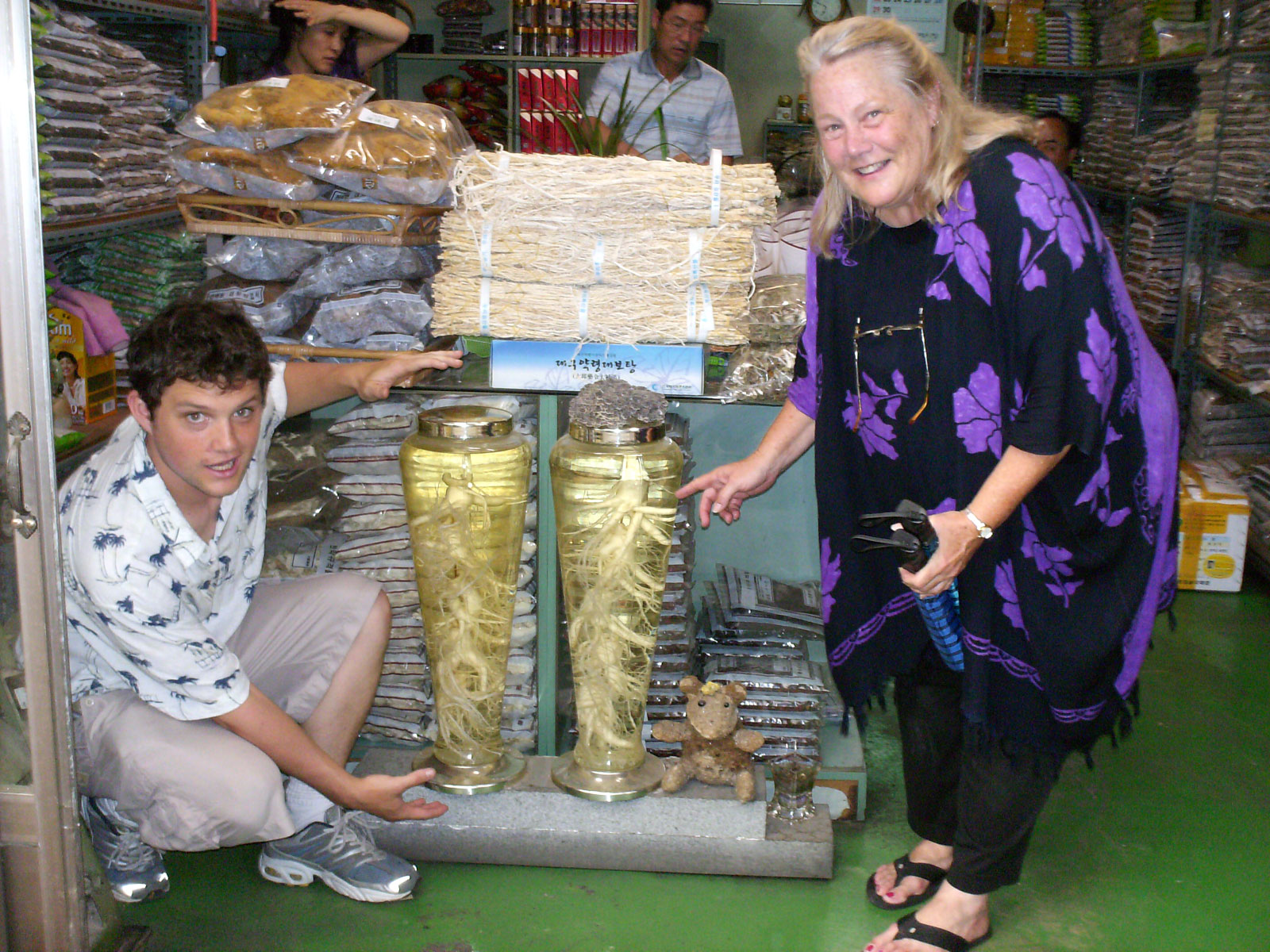
Here we are on the street in Daegu where dozens of shops sell oriental medicines, including huge, expensive jars of preserved gingseng. Daegu, just in case you never heard of the small city, has 2.5 million! Click for a large image.
 A view from the Daegu TV tower, which, among other attractions, had a "sky toilet", which we visited, with stunning views of the city, and a "sky jump", which we did not try. As you can see, Daegu is a big and a modern city. Click to see a larger image.  |
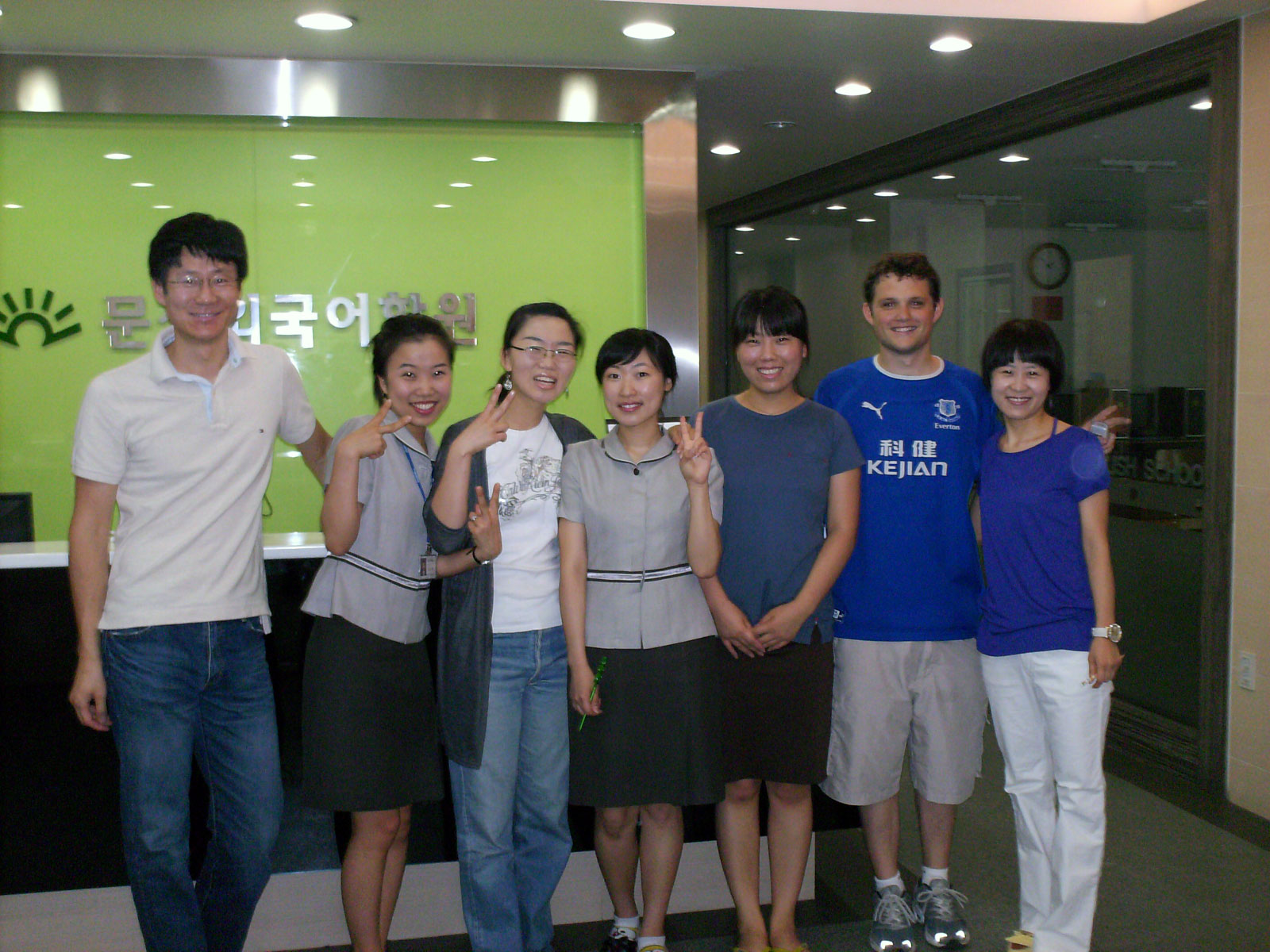
David, his manager (third from left) and colleagues at the Moon Kkang English School in Daegu. Click to see a large image.
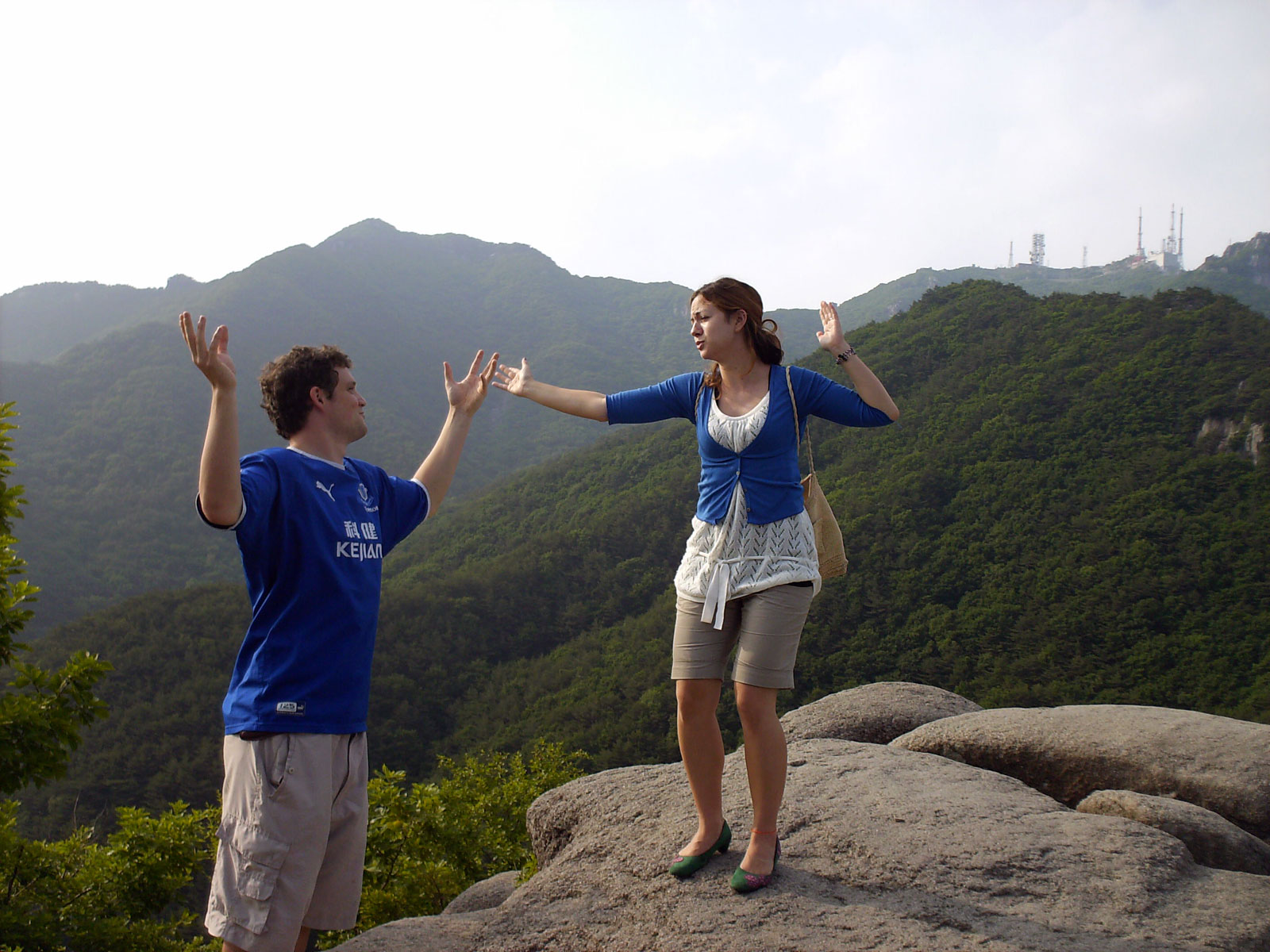
David & Brielle re-enacting the "Sound of Music" in the mountains, this on Mt.Palgongsan outside Daegu. Click to see a large image.
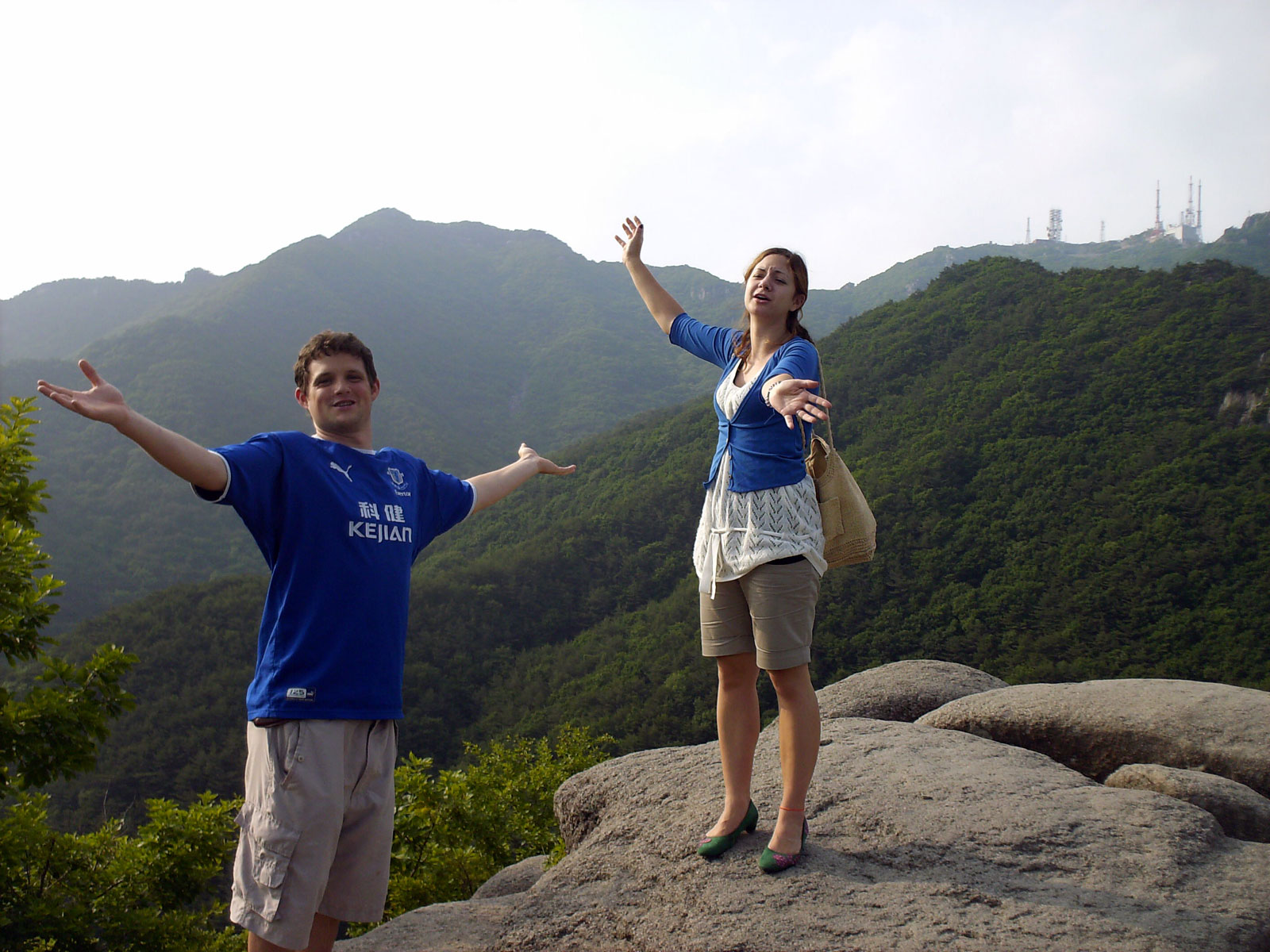
Brielle and David performing on a mountain. Koreans, in their thousands, go to mountains on weekends to climb them and enjoy the outside. Click for a large image.
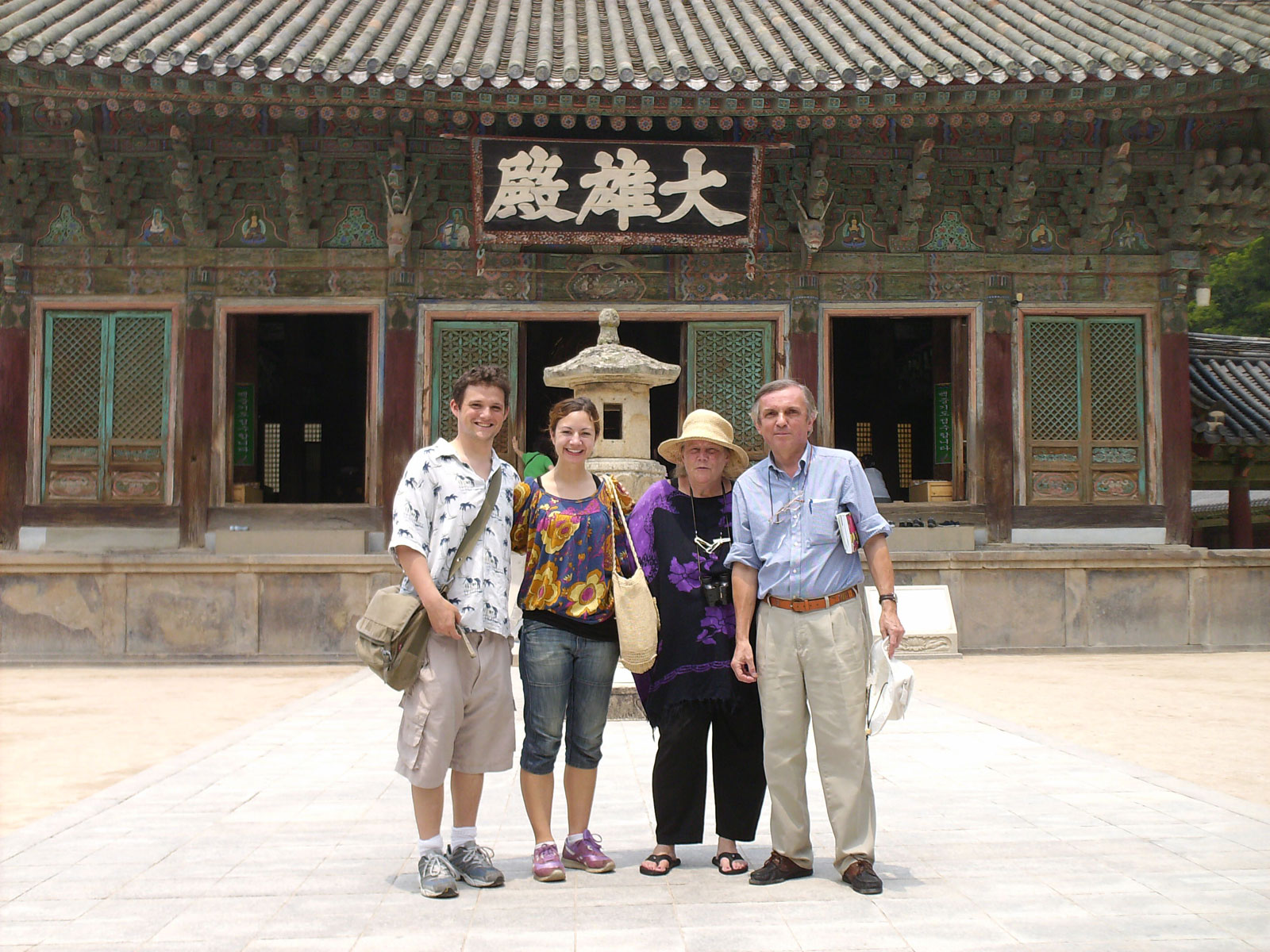
Gyeongju, an hour's drive from Daegu, has more tombs, temples, pagodas, Buddhist statuary and palaces, pleasure gardens and pilgrimage sites than any other place in South Korea. We enjoyed our trip there, especially because Brielle and David knew where to take us. Click to see a large image.

The entrance to the Bulguksa temple is protected by 4 fierce guards. Here is one, ably assisted by David & Brielle. Click to see a large image.
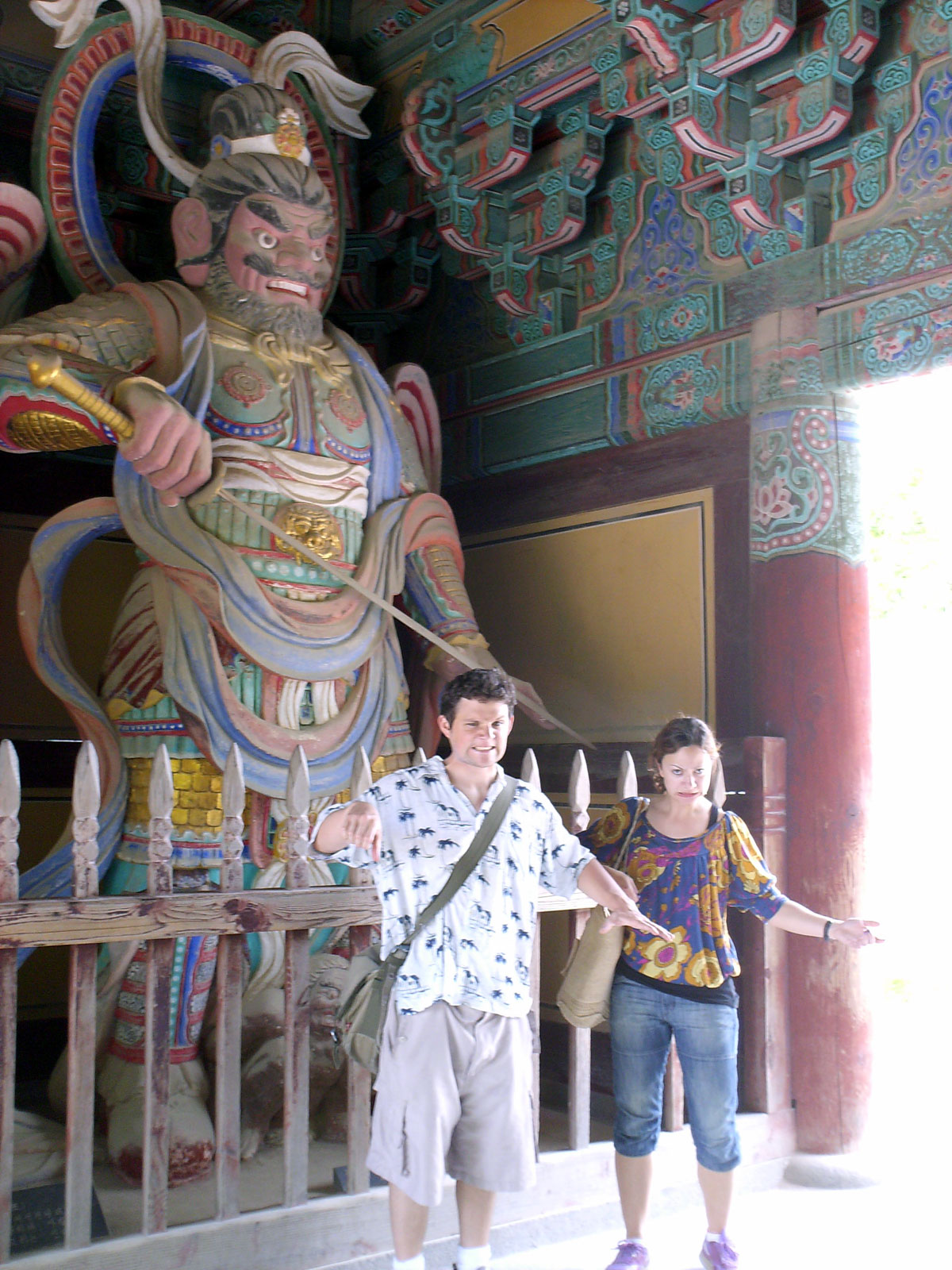
Guards at the entrance to the Bulguksa temple complex, built on stone terraces about 10 miles from Gyeongju. Click for a large image.
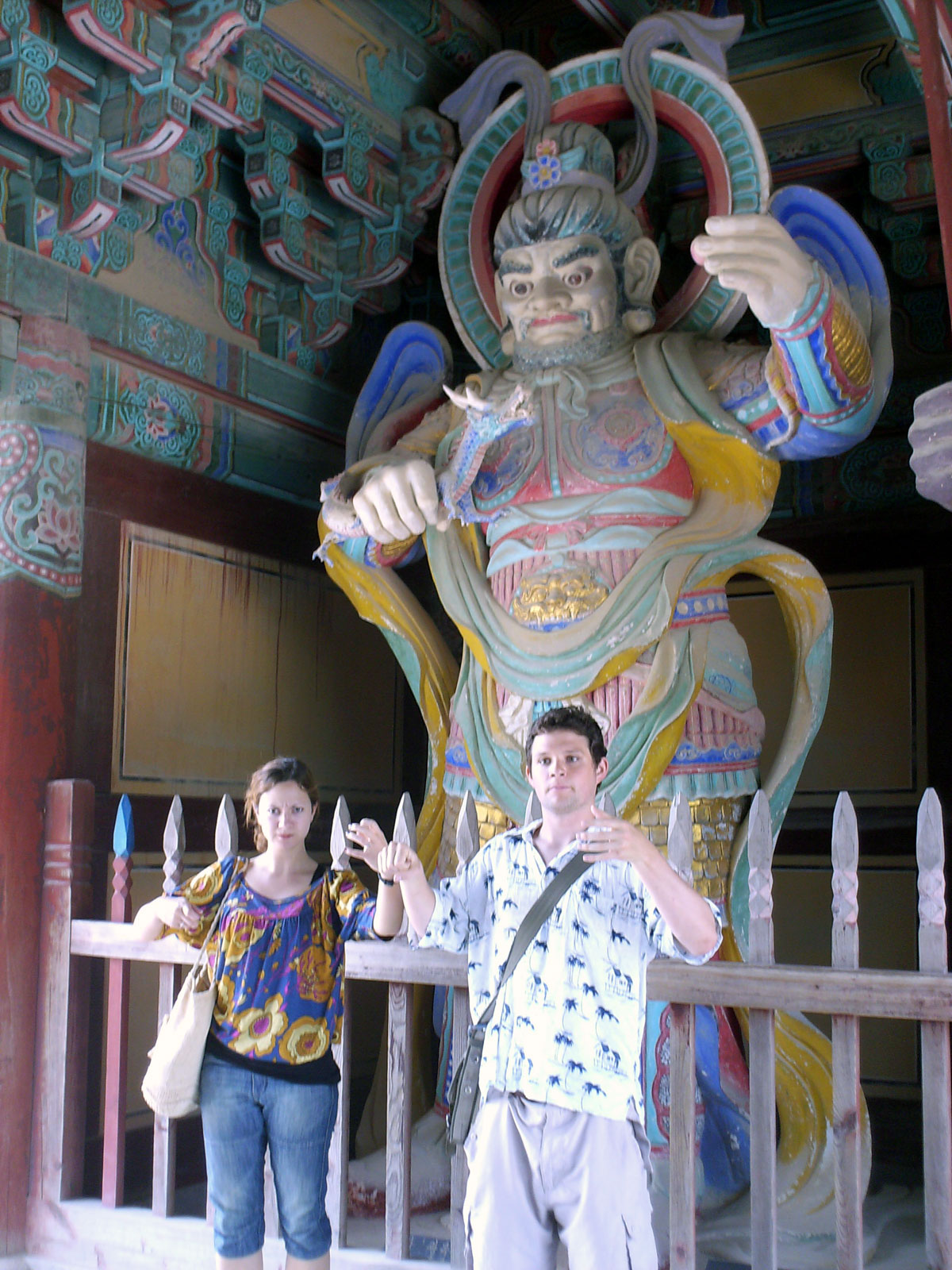
Gyeongju used to be the capital of one of the three kingdoms in what is now Korea, the Shilla kingdom, powerfully ruling from 668 to 930 A.D. They built many palaces and temples and left richly endowed royal tombs in the area. Click to see a large image.

Bulguksa temples are set in pine woods and iris gardens. The place is, of course, yet another UNESCO World Heritage site, just like our home town of Antigua, Guatemala. David & Brielle had fun. Click for a large image.
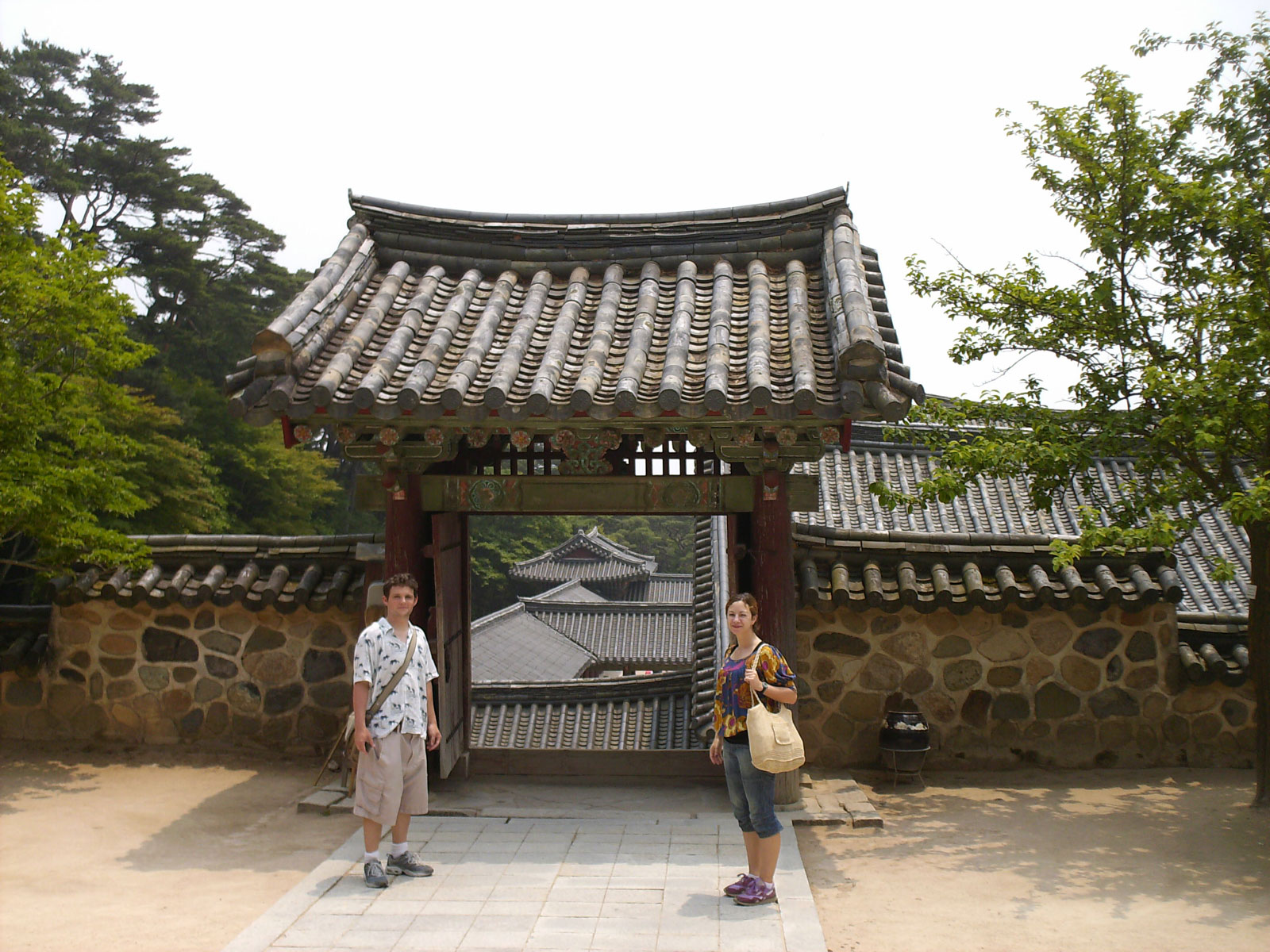
The Bulguksa temple complex is beautiful and serene. The place is obviously set to receive thousands of visitors on weekends, judging by huge parking lots and hundreds of restaurants near them, but we pretty much had it to ourselves on a Monday lunchtime. Here Brielle and David are standing in one of the many doorways that connect various levels. At each higher level, there is yet another temple. Click to see a large image.
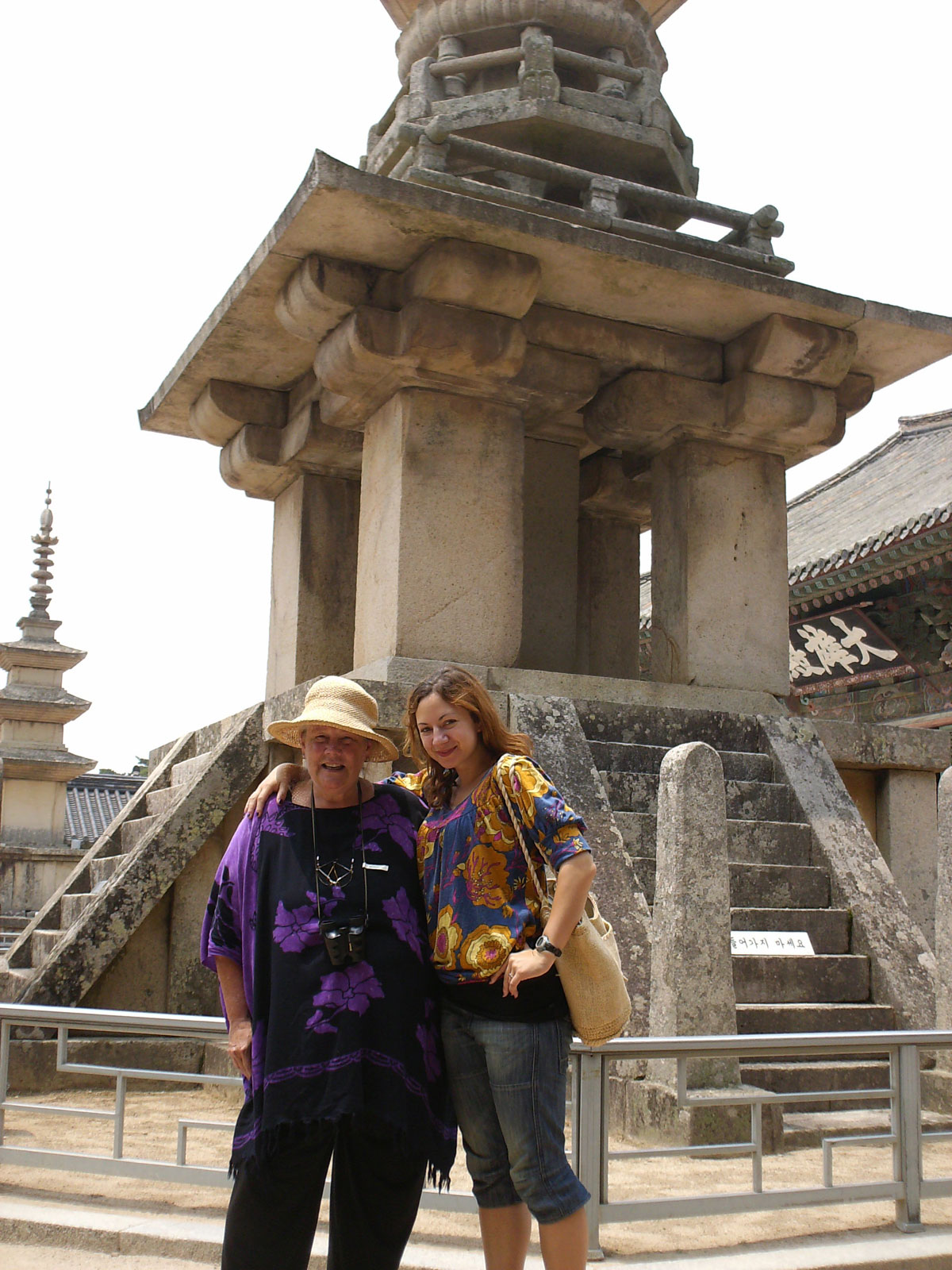
In front of the main Bulguksa temple, there are two 7th century pagodas that somehow survived Japanese destruction of the temples. This one is Seokgatap, an elaborate, women's pagoda, with Barbara and Brielle. Click to see a large image.
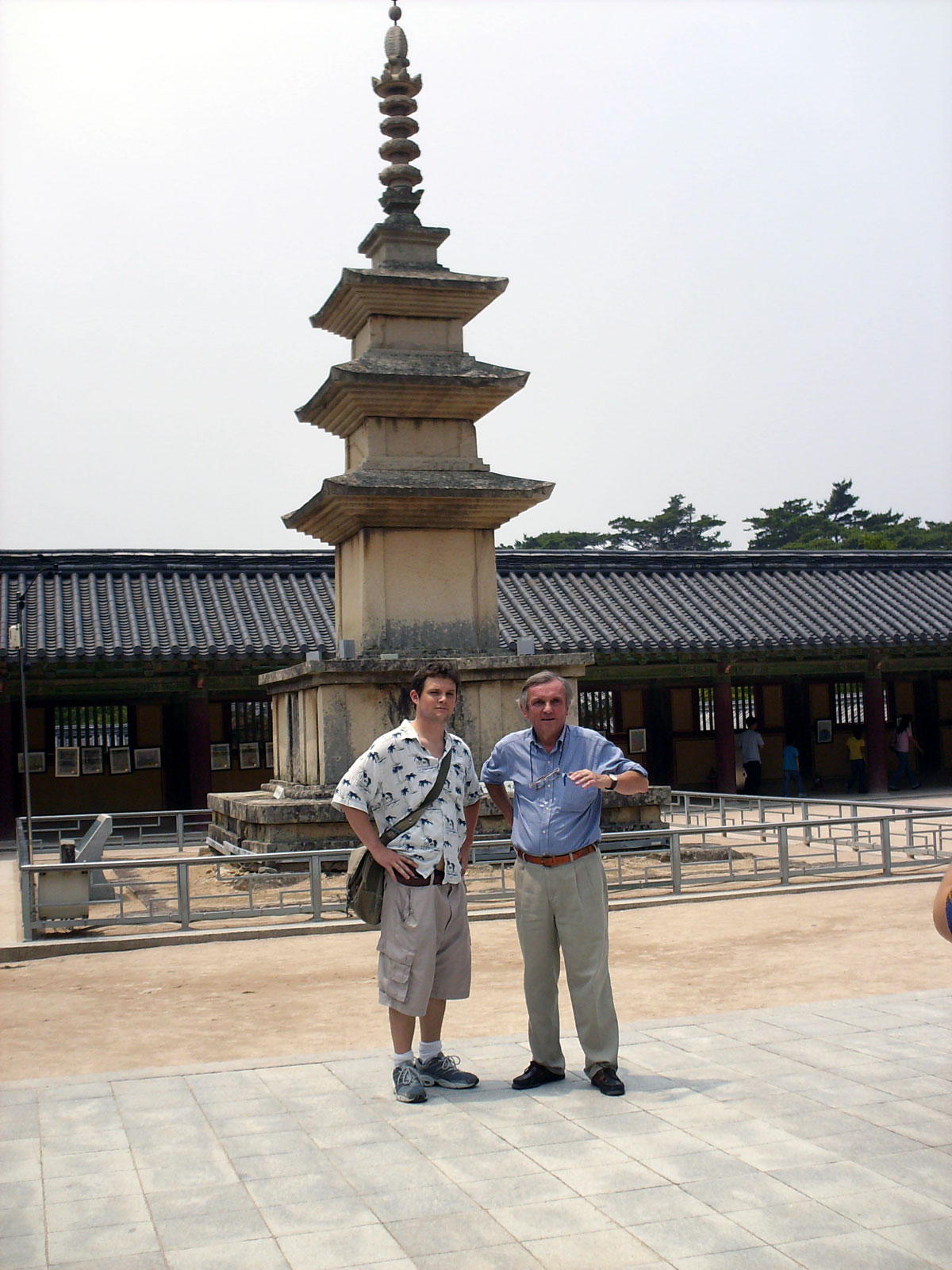
The other pagoda, of very simple design, is called Dabotap, both of Shilla dynasty design and major Korean national treasures, this one maybe men's pagoda, here with Tomas & David. Click for a large image.
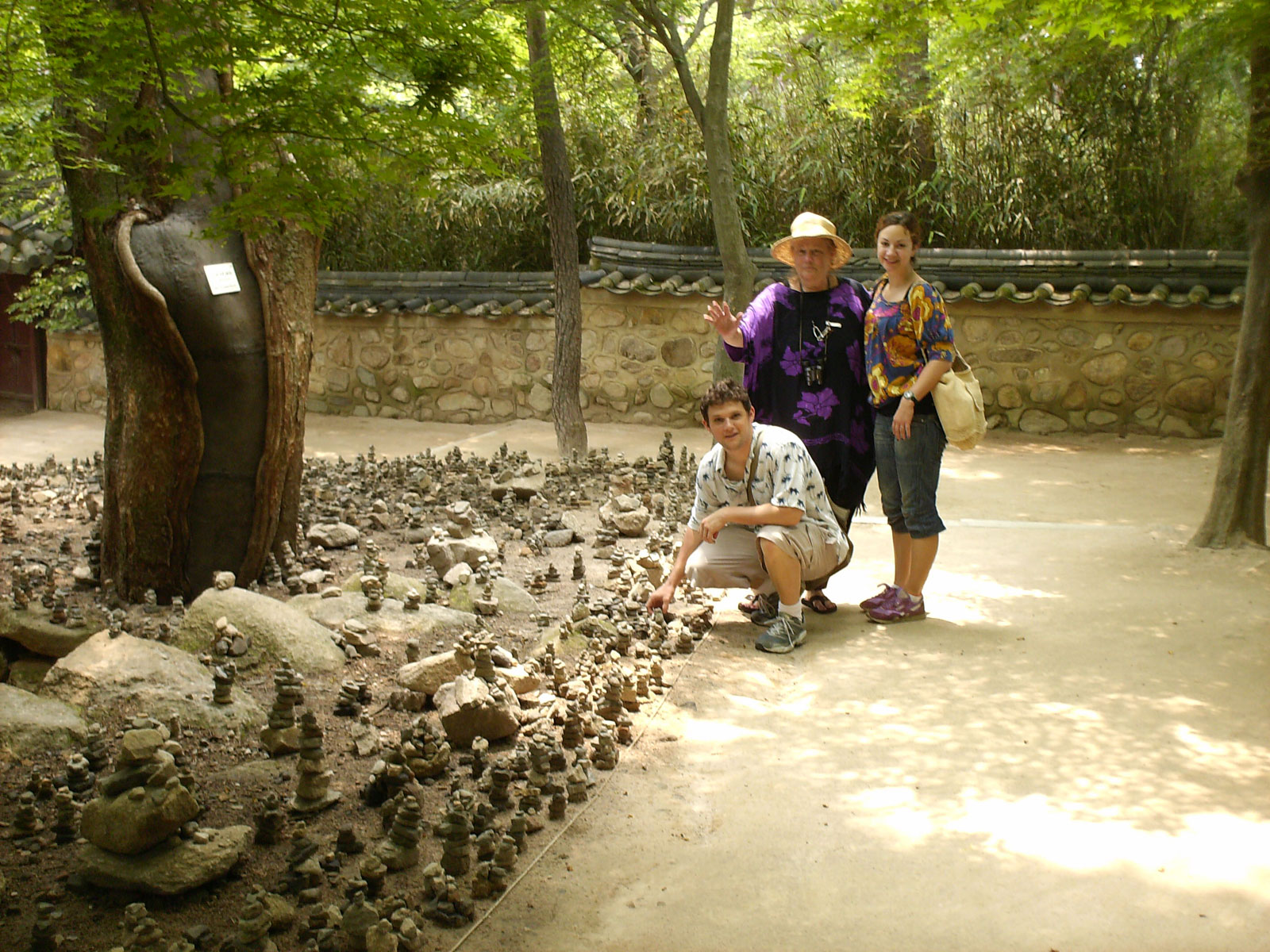
Behind the main Bulguksa temple, there is an area where visitors build and leave behind small stone structures of "Wish Rocks" to make their wishes come true. Here David is building his. Click to see a large image.
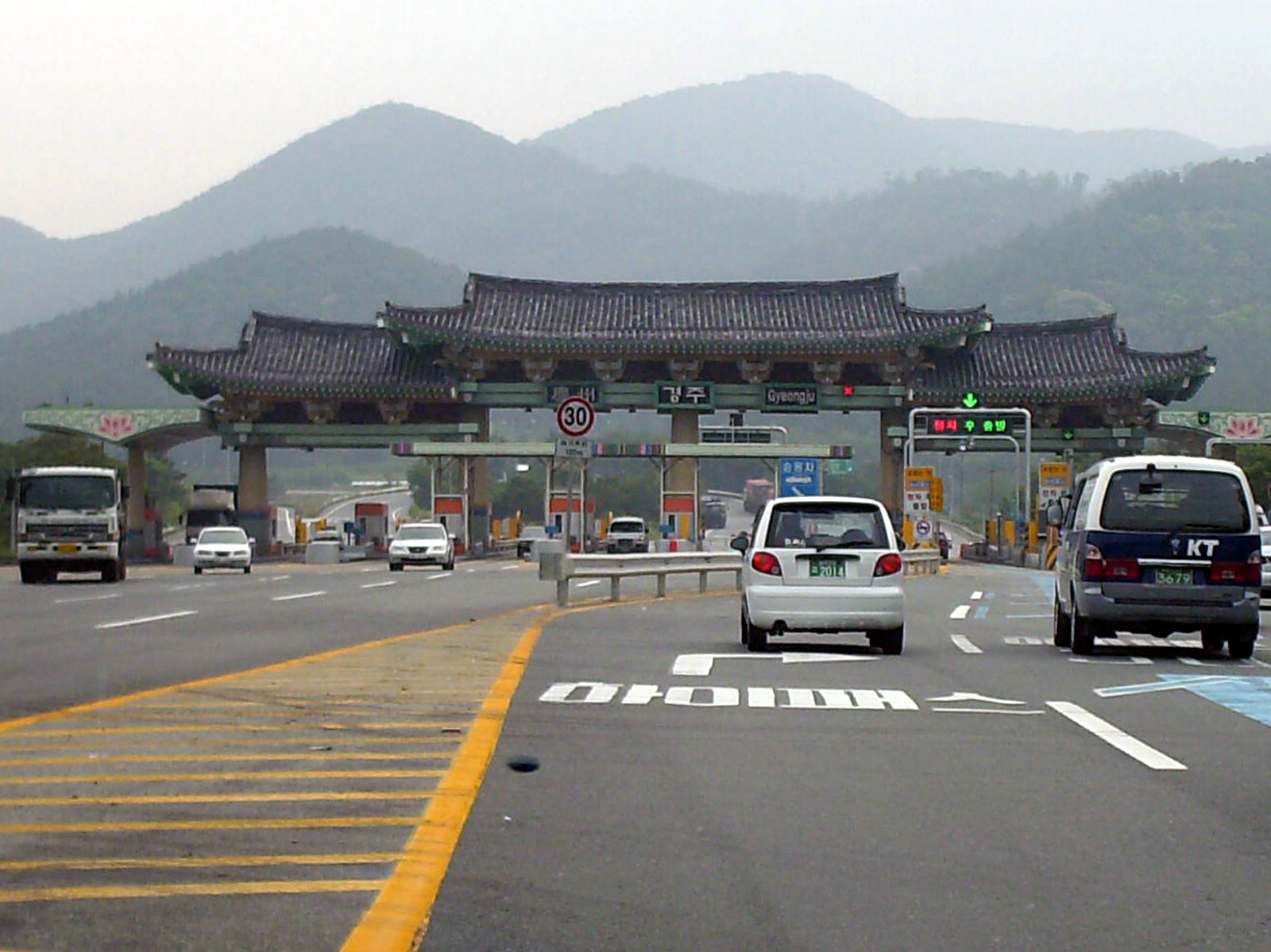
Gyeongju is a special town in Korea. It is so full of temples and other historical sites that even all the gas stations are built to look like small pagodas. The museum is amazing, holding treasures from some of the royal tombs. And when we left, for the highway back to Daegu, we passed the "pagoda toll booth". We had a fabulous visit to South Korea, a modern country with a rich history. Click to see a large image.
Click here to see photos from Seoul, South Korea, Beijing, The Great Wall, X'ian, Chongqing, Fengdu "City of Ghosts", Yangtze River and the "Lesser Three Gorges", the Three Gorges Dam, Wuhan, Shanghai, Suzhou, or go back to Barbara's narrative of the trip.